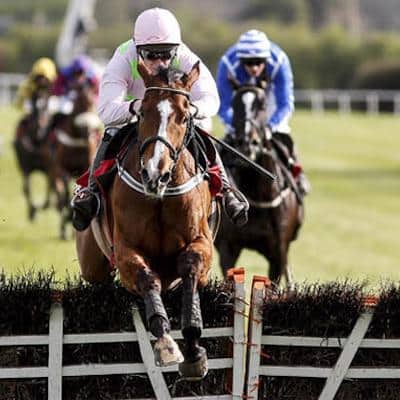

If you’ve ever searched for free horse racing tips for today, you’ve likely encountered a common pattern: a list of horses with a couple of confident labels like NAP or banker, and very little explanation.
Before we get into it, you can view our free horse racing tips each day here.
So, can these free tips still be useful? Yes, sometimes. But only if you know how to filter them, sanity-check them, and turn them into a decision you’d still back even if the tipster disappears tomorrow. This is what I aim to help you with in this guide.
I’m not going to pretend I can “predict” today’s winners for every track. Instead, I’ll provide you with a practical process you can use today, along with a simple checklist to evaluate any racing tip you come across online. Additionally, you’ll receive a step-by-step example that you can replicate for your own notes.
Responsible betting note (quick but important): decide your bankroll, set limits, and never chase losses. Horse racing has variance. Even great bets can lose. Your job is to make good decisions repeatedly, not to “be right” every race.
Why “Free Horse Racing Tips” Are Everywhere (And Why Most Aren’t Worth Following)
Free tips are everywhere because they’re a perfect attention magnet. They attract clicks, followers, and signups. In the realm of racing, attention converts well since people seek certainty in an uncertain game.
However, the majority of free horse racing tips available today aren’t aimed at helping you win long-term. Instead, they are designed to:
- Drive affiliate signups to bookmakers.
- Funnel you into a paid Telegram or VIP service.
- Build a “winning streak” narrative without transparent proofing.
- Post selections after price moves so the results look cleaner in hindsight.
To navigate through this maze of information effectively, it’s crucial to know where to find reliable sources. Websites like Tipster Reviews offer valuable insights into finding trustworthy free horse racing commentary and highlight the best free horse racing tipsters available online. Furthermore, they provide comprehensive lists of the 17 best free horse racing commentary sources, which can significantly enhance your understanding and strategy in horse racing betting.
Common issues I see with “racing tips today”
1) No proofing or record.
If a tipster can’t show a timestamped record with odds taken, staking, and ROI over a meaningful sample, you’re looking at marketing, not a strategy. To avoid this pitfall, consider seeking advice from the best free horse racing tipsters.
2) Vague selections.
Stuff like “value each-way” without a price range, place terms, or a reason is basically noise. A reliable tipster will provide more detailed insights rather than generic statements.
3) Posted after the price collapses.
A horse tipped at 8/1 that’s now 9/2 is not the same bet. The tip might still win, but you’ve lost the value edge. This is why timing and understanding market movements are crucial in betting.
4) Hype language that replaces analysis.
“Absolute certainty.” “Can’t lose.” “Steaming.” “Good thing.” The race doesn’t care. Instead of falling for such hype, it’s better to rely on free horse racing systems that actually work, which are grounded in data and analysis.
What this guide will do differently
- Give you a repeatable process for building your own tips in 10 to 15 minutes per race.
- Teach you how to judge free tips using a value-first checklist.
- Show you how to track quality using concepts like closing line value (CLV).
- Keep it grounded in reality: limitations, variance, and why disciplined skipping is a skill.
What Actually Makes a Good Horse Betting Tip (A Simple Checklist)
A good tip is not just a horse name. It’s a better decision with context.
When you read any free horse racing tip today, run it through this checklist. If the tip doesn’t provide enough info to answer these questions, you should assume it’s incomplete.
To improve your betting strategy further, consider exploring horse racing handicapping strategies and tips for success. These resources can provide valuable insights and help refine your approach to betting.
The checklist
1) What’s the race context?
- Class level
- Distance
- Going (ground)
- Field size
- Track type and layout (flat/jumps, left/right-handed)
2) What’s the angle?
The tip should say why the horse is a bet today, not just “in good form.” Examples of real angles:
- Proven on soft ground, and it’s turned soft today.
- Strong finisher in a race with likely strong early pace.
- Dropping in class after racing against better horses.
- Trainer/jockey combo signals intent.
3) Price vs probability (value check).
This is the big one. Odds imply probability.
- 2/1 implies about 33%
- 5/1 implies about 16.7%
- 10/1 implies about 9.1%
If the tipster can’t explain why the horse wins (or places) more often than the odds imply, it’s not a value tip. It’s just a pick.
4) Clear bet type.
Win, each-way, place, lay, forecast. The bet type should match the profile.
5) Staking logic.
Even something simple is fine. “1 unit win” is better than “max bet nap banker.”
Why does this stop you from getting misled?
Most “random” tips look good only because they select plausible horses. This checklist forces the tip to justify price and structure. It turns you from a follower into a decision-maker.
The Fast “Today” Method: How to Build Your Own Racing Tips in 10–15 Minutes Per Race
You don’t need a complex model to beat most low-quality free tips. You need a consistent workflow.
Here’s a repeatable method you can run daily.
Step 1: Start with the racecard basics (30 seconds)
Write down:
- Class
- Distance
- Going
- Field size
- Track type (flat/jumps; left/right-handed; straight/turning)
This matters because some horses are basically different animals when you change one variable.
Step 2: Identify likely pace and how the race might be run (2 minutes)
Ask:
- Who leads?
- Is there one obvious front-runner (possible soft lead)?
- Are there several pace angles (possible pace collapse)?
Pace is one of the fastest ways to spot when a favourite is vulnerable.
Step 3: Quick form scan (3–5 minutes)
You’re not reading every line. You’re looking for:
- Recent performances that match today’s setup (distance, going, class).
- Finishing effort and running style (held up, prominent, front-runner).
- Signs of excuses last time that could reverse today (bad draw, wrong ground, trouble in running).
Step 4: Suitability filter (2 minutes)
Eliminate runners that look wrong for today:
- Unproven at the trip with weak pedigree signals.
- Repeatedly poor on the going.
- Outclassed or badly treated at the weights (especially in handicaps).
You often win by removing bad fits, not by “finding a secret.”
For more insights on how to study horse racing effectively, consider exploring various resources available online.
Step 5: Shortlist 2–3 runners (1 minute)
At this point, you’re not choosing a bet. You’re selecting candidates worth pricing up.
Step 6: Price check (2 minutes)
Now compare market odds to your rough view.
- If a horse looks like a 25% chance, you want 3/1+ (since 3/1 implies 25%).
- If the market offers 2/1 (33%) and you think it’s 25%, that’s not value.
Also, avoid forcing bets at short odds if you can’t explain the edge clearly.
Step 7: Pick your bet type and staking (2 minutes)
Keep it simple:
- 1 to 2 bets per race max
- Prefer one strong bet over multiple “covering” bets that dilute value.
Mini template (copy/paste for daily notes)
Race: Conditions (class/distance/going/field): Pace view: Shortlist: My pick: Why (3 bullets): Odds I’d take (range): Bet type (win/EW/place/lay): Stake (units): What would change my mind:
Free Horse Racing Tips For Today: How to Use Them Without Getting Burned
Here’s my honest stance: free tips can be useful, but only as a starting point. For instance, today’s free tips can provide valuable insights, but should be treated as a headline that tells you where to look, not what to believe.
A smart way to consume free tips
1) Treat tips like a portfolio.
Track them like you’d track investments:
- Number of bets
- Strike rate
- ROI
- Max drawdown
- Average odds
- Whether the odds quoted were actually available
If someone is good, the numbers will show it over time.
2) Look for timestamps and odds taken.
A tip is only meaningful if you can replicate it.
3) Compare the tip price to the closing price (CLV).
While free tips have their place, it’s important to understand the difference between free and paid horse racing tipsters and how premium services might offer more reliable insights.
What is Closing Line Value (CLV), in plain English?
CLV means: Did you beat the final market price?
Example:
- You back a horse at 6/1 in the morning.
- It goes off at 4/1 at the start.
You got CLV. Even if it loses today, consistently beating the closing price is a strong signal that your process is finding value.
It’s not perfect, and you can still lose money with positive CLV in small samples. But over time, CLV is one of the clearest quality checks you can do without being a professional trader.
Traps that burn people (especially on “tips today” content)
- Accumulator addiction: a fun bet type that quietly destroys bankrolls.
- “Nap of the day” hype: confidence is not evidence.
- Telegram pumps: coordinated tipping that moves a price fast, leaving late followers with terrible value.

The 6 Biggest Factors That Decide Most Races (Use These to Judge Any Tip)
Think of these as handicapping pillars. You don’t need to master everything. You need to scan quickly for the factors that matter most in today’s race.
1) Going/ground
Ground changes outcomes fast.
Green flags
- Proven wins or big runs on today’s going.
- Pedigree suggests improvement on soft/heavy or firm.
- The trainer has a pattern of targeting the ground.
Red flags
- Repeated poor runs on similar ground.
- Action suggests they hate it (struggling early, never travelling).
- Big drift after rain update (market sometimes reacts for a reason).
2) Distance (trip)
A horse can look “in form” but be running over the wrong trip.
Green flags
- Strong finish suggests a step up in trip will help.
- Proven at the trip or close enough with clear indicators.
- Race setup supports their stamina or speed.
Red flags
- Fading late repeatedly on the trip.
- Needing further, but stuck at a sharp distance.
- Trying a new trip with no evidence and a short price.
3) Class and competition level
Class drops can be gold. Class rises can expose weaknesses.
Green flags
- Dropping in class after holding their own in better races.
- A handicapper relenting, or a sensible mark return.
- Race looks weaker than recent form suggests.
Red flags
- Winning in a weak race and now priced like that form is universal.
- Stepping up in class after a perfect setup win.
- Inflated reputation horse with little substance.
4) Pace and race shape
Pace is often the hidden driver behind “surprise” results.
Green flags
- The lone front-runner could control the race.
- Strong closer in a race with too much pace.
- Tactical speed in small fields.
Red flags
- The short-priced favourite needs everything to fall right from the rear.
- Several front-runners are likely to cut each other’s throats.
- Horse repeatedly gets caught wide and races keenly.
5) Course/track quirks (and draw bias when relevant)
Some tracks reward certain styles or draws.
Green flags
- Proven course form, especially at quirky tracks.
- Running style matches track (prominent at tight tracks, for example).
- Draw plus pace position looks ideal.
Red flags
- Bad draw for their style in big fields (when the track shows bias).
- Horses that hate undulations, cambers, and sharp turns.
- Betting a hold-up horse at a track that favours front-runners, at a short price.
6) Connections/intent (trainer, jockey, equipment, targets)
This one is real, but it’s also where bias and storytelling creep in.
Green flags
- Positive jockey booking (stable’s go-to rider).
- First-time headgear with a logical reason, not desperation.
- Trainer in strong recent form, with similar runners peaking now.
Red flags
- Overrating “stable confidence” rumours.
- Headgear swaps every run (sign of searching).
- A horse that looks like it’s being readied for another day.
Bet Types for Today’s Races (And When Each One Makes Sense)
Picking the right bet type matters almost as much as picking the right horse.
Win bets
Best when:
- You think the horse wins more often than the odds imply.
- The horse has a solid win profile (not just a place machine).
- You’re happy to accept variance.
Avoid when:
- The horse places often but rarely wins.
- You’re taking a short price without a clear edge.
Each-way bets (and when EW is bad value)
Each-way means two bets: one to win, one to place. Place terms vary by race type, runner count, and bookmaker.
Best when:
- Bigger fields with strong place terms.
- Your horse is overpriced but has strong place chances.
- You can get enhanced terms that actually improve the math.
Bad value when:
- Short fields (fewer places).
- Short prices (EW becomes a poor deal because the place part pays little).
- You’re using EW as emotional insurance instead of value.
Place bets
Place betting can be sharper than EW when:
- The horse is much more likely to place than win.
- The win market is too tight, but the place odds are generous.
Lay betting (exchange) in simple terms
Laying means betting a horse not to win.
When it can make sense:
- Short-priced favourite with clear vulnerabilities (pace, ground, fitness, class).
- A horse that finds ways to lose, now priced as if it’s reliable.
- You can articulate why it fails often enough at that price.
If you’re new, keep it small. Lays can be higher risk if you don’t understand liability.
Avoiding bad combinations
- Random multiples because “today feels good.”
- Martingale systems (doubling after losses).
- Chasing to “get it back” in the next race.
Simple decision tree
- Do I think it wins often enough at this price?
- Yes → Win bet
- Is it more likely to place than win, and are the place terms fair?
- Yes → Place or each-way
- Is the favourite too short with clear negatives?
- Consider → Lay (small, only if you understand liability)
Staking: The Part Most “Racing Tips Today” Never Explain
Staking is where most people lose control, even with decent selections.
Define your bankroll and units
Your bankroll is the money set aside for betting, separate from bills and life.
Pick a unit size, for example:
- Bankroll: 100 units
- 1 unit: 1% of bankroll
That alone stops a bad week from turning into damage.
Simple staking options for beginners
Option 1: Flat staking (recommended to start)
- 1 unit per bet
- No exceptions, no “max bets”
Option 2: Cautious scaling (still simple)
- 0.5 units for marginal value
- 1 unit for standard value
- 1.5 to 2 units only for your very best bets, and only if you can justify it
How many bets per day?
If you want a practical cap:
- 3 to 6 bets per day is plenty for most people.
- If you’re betting more, you’re probably overtrading.
Record-keeping (the unsexy edge)
Track:
- Date
- Race
- Bet type
- Odds taken
- Stake
- Result
- Notes (why you bet, what you learned)
The goal is to review the process, not to obsess over one unlucky photo finish.
A Practical Example: Turning One Racecard Into a Tip (Step-by-Step Reasoning)
Let’s walk through a hypothetical race so you can see the 10 to 15 minute method in action. No real horses needed.
The race (hypothetical)
- Flat handicap
- Class 4
- 1 mile (8f)
- Going: Soft
- Field size: 12
- Track: left-handed, with a relatively short straight
Step 1: Basics check
Soft ground and a turning mile often reward:
- Balance around turns
- The ability to travel on soft
- A prominent position (depending on pace)
Step 2: Pace view
From the card, you identify:
- 2 likely front-runners
- 3 prominent racers
- Several hold-up horses
So you expect a fair pace, possibly strong if both leaders go hard.
Initial implication: closers might get a chance if pace collapses, but soft ground can also make it hard to come from too far back.
Step 3: Form scan and elimination
You quickly sort runners into three groups.
Eliminate (not suited):
- Runner A: 0/4 on soft, repeatedly fails to travel.
- Runner B: best form at 7f, fades late at a mile.
- Runner C: stepping up two classes after winning a weak race, now short in the market.
Maybe:
- Runner D: lightly raced, unknown on soft, pedigree suggests okay.
- Runner E: consistent placer, rarely wins.
Interesting:
- Runner F: proven soft winner, strong finisher, ran in higher class two starts ago.
- Runner G: front-runner with best speed figures on soft, but might face pace pressure.
- Runner H: course winner, but current form is flat and needs a bounce back.
In such scenarios, incorporating effective horse racing systems can enhance your betting strategy.
Step 4: Build a shortlist
Shortlist: F, G, H
Now you decide what each needs to happen to win.
- F needs a pace that sets up a closer, plus a clear run.
- G needs to avoid a pace war and settle.
- H needs a form return that might or might not be there.
Step 5: Put rough probabilities on them
You don’t need perfection, just discipline.
- F: 20% (roughly 4/1 fair)
- G: 16% (roughly 5/1 fair)
- H: 10% (roughly 9/1 fair)
Step 6: Compare to the market
You check early odds:
- F available at 6/1
- G at 9/2
- H at 10/1
Now ask: where’s the value?
- F: You think fair is 4/1, you’re getting 6/1. That’s value.
- G: You think fair is 5/1, you’re getting 9/2. Not value.
- H: Close to fair, but it depends on how confident you are in the bounce back.
Step 7: Choose bet type and stake
Field size 12 often means reasonable each-way terms, but you still need the price to make sense.
If F is a closer who could run into traffic, and you rate them strongly to hit the frame, you might choose:
- Bet: 1 unit each-way at 6/1+, only if place terms are standard or better.
- Or Bet: 1 unit win if you believe the win edge is strong and you don’t want to pay for the place part.
“What would change my mind?” note
This is the part most tips never include, and it matters.
- If rain turns soft into heavy, re-check F’s heavy-ground evidence.
- If a key front-runner is a non-runner, pace might collapse, hurting F’s setup.
- If F drifts heavily late while others shorten, verify there’s no negative info (but don’t assume drift always means “bad”).
That is a complete tip process: selection, price range, bet type, and conditions for re-evaluation.
Where to Get Better “Free Horse Racing Tips” (Without Paying for a Tipster)
If you want better free inputs, focus on information sources, not “picks.”
What to look for in any free source
- Transparent records (or at least honest tracking)
- Timestamps
- Odds quoted and bookmaker/exchange reference
- Reasoning, you can audit
- Consistency in staking approach
Use markets as information (with caution)
Markets can be smart, but not magical.
- Early moves can signal stable support, but can also be noise.
- Late moves can reflect real money, but you might be late to the value.
Your best use of the market is this:
- Define your price.
- If you can get it, bet.
- If you can’t, skip.
Build a short daily shortlist
A simple approach that keeps you disciplined:
- Choose 3 races you’ll focus on.
- Aim for 1 to 2 bets max across them.
- Only bet when the price and setup match your checklist.
That’s how you avoid turning “tips for today” into all-day gambling.
How to Stay Consistent: Your Daily “Racing Tips Today” Routine (5 Minutes Before You Bet)
Most bankroll damage happens right before the bet: when people rush, tilt, or ignore their own rules.
Pre-bet routine (5 minutes)
- Confirm that the going is what you priced for.
- Check non-runners and how they change pace and place terms.
- Re-check draw/pace if it’s a race where that matters.
- Confirm the price is still in your range.
- Ask: Does this still pass the checklist? If not, skip.
Skipping is a skill. It protects your bankroll and your mindset.
Post-bet routine (1 minute)
Write one line:
- Was it a good bet by process, even if it lost?
- Or was it a bad bet that happened to win?
This is how you improve.
Weekly review (15 minutes)
Spot patterns:
- Are your each-way bets actually profitable?
- Are you overbetting short prices?
- Are you ignoring pace?
- Are your losses clustered around bad decisions or just variance?
The takeaway
Use free horse racing tips for today as input, not instructions.
If you want to stop getting burned, keep it structured:
- Use the checklist.
- Demand a price edge.
- Keep staking simple.
- Track your results.
- Review process weekly.
That’s how you turn “free tips” into a repeatable betting approach you can trust, today and long term.
FAQs (Frequently Asked Questions)
Are free horse racing tips for today reliable for making betting decisions?
Free horse racing tips can be useful sometimes, but only if you know how to filter them, sanity-check them, and turn them into decisions you’d back even if the tipster disappears tomorrow. It’s important to evaluate each tip critically rather than blindly following confident labels like NAP or banker.
Why are free horse racing tips so common online, and should I trust them?
Free horse racing tips are widespread because they attract clicks, followers, and signups. However, most are designed to drive affiliate signups, funnel users into paid services, or create misleading winning streak narratives without transparent proofing. Therefore, it’s essential to approach free tips cautiously and seek reliable sources with proven track records.
What are common issues with ‘racing tips today’ that bettors should watch out for?
Common problems include: lack of proofing or timestamped records showing odds and ROI; vague selections without detailed reasoning; posting tips after price collapses, which reduces value; and hype language replacing solid analysis. Recognising these issues helps you avoid low-quality tips.
How can I evaluate the quality of a free horse racing tip effectively?
Use a simple checklist focusing on context, such as race, class level, distance, going (ground), field size, and track type. Also consider the angle—why the horse is a bet today—with specific reasons like suitability to conditions or changes in class. Tips lacking this information should be treated as incomplete.
What does this guide offer that differs from typical free horse racing tips?
This guide provides a repeatable process to build your own tips in 10-15 minutes per race, teaches how to judge free tips using a value-first checklist, shows how to track quality through concepts like closing line value (CLV), and emphasises disciplined skipping and understanding variance instead of chasing every race.
What responsible betting advice should I follow when using horse racing tips?
Decide your bankroll before betting, set strict limits on losses, and never chase losses, as horse racing involves variance—even great bets can lose. Your goal is to make good decisions repeatedly over time rather than being right every single race